Tuesday, June 3, 2014

Apple CEO says users who buy Android ‘by mistake’ look for a ‘better life’ on iOS

Cook on Android Fragmentation and Malware


Apple and Google may have inked a truce when it comes to patent trials, but the two companies remain fierce rivals in the mobile and tablet businesses, and the iPad maker clearly had fighting words for Google during its WWDC 2014 opening keynote.
When presenting the usual Apple statistics that precede major announcements, Apple CEO Tim Cook took clear hits at his company’s main rival, making fun of Google’s Android several times. But Apple also took some indirect hits at Google, through the new features it introduced during the event.
Cook revealed Apple has sold well over 800 million iOS devices to date – including over 100 million iPod touch units, over 200 million iPads and over 500 million iPhones – with 130 million of them being sold last year alone. Many of those Apple customers were switching from Android, Cook revealed in no uncertain terms.
“Over 130 million customers who bought an iOS device in the past 12 months, were buying their first iOS device,” Cook said. “Now, many of these customers were switchers from Android.”
“They had bought an Android phone… by mistake,” Cook added, igniting the crowd in attendance, “and then sought a better experience, and a better life, and decided to check iPhone and iOS.” Cook went on to say that nearly half of Apple’s customers in China in the past six months came from Android.
Further comparing iOS to Android, Cook said that while iOS 7 is currently installed on over 89% of existing devices, Google’s KitKat is only available on 9% of the current Android base. The exec said that Apple’s practice of making iOS available to as many customers as possible is one of the things that makes iOS popular with its users.
Cook took another hit at Google for its fragmentation issues. “If you look at a broader group, over a third of [Android] customers, are running a version of Android from four years ago,” Cook said. “That’s like ancient history.”
“That means these customers are not getting great new features. They’re not able to run your latest apps,” he told developers in the audience. “And they don’t get security updates they may need to stay safe.”
Cook also addressed another issue Android is popular for, malware. “Android dominates the mobile malware market,” the exec said, because of its fragmentation.
“No wonder experts are saying things like this,” Cook said, quoting ZDNet’s Adrian Kingsley-Hughes: “Android fragmentation is turning devices into a toxic hellstew of vulnerabilities.”
In addition to Cook’s direct attacks at Android, Apple also hit Google indirectly via some of the products it launched. The company significantly improved its Spotlight search feature on Yosemite and iOS 8 to deliver more results to the user, without requiring an obvious middleman such as Google Search, and even gave prominent placement to Microsoft’s Bing auto-translate online service while introducing iOS 8 on stage. Apple mentioned on its website that DuckDuckGo, which will be available to Apple users, is a search engine that doesn’t track users, while Microsoft confirmed that Bing will actually be the default search engine for both Yosemite and iOS 8.
Furthermore, Apple has significantly improved iCloud prices to better compete with Google’s cloud offers, and has added cloud support for more file types.
Finally, and probably even more important than other moves, are Apple’s announcements for developers. The company has introduced several new tools and features that should help developers stay motivated in creating apps for iOS first – Apple introduced new App Store features to help with app discovery and app sales, but also new programming tools to help game creators come up with console-like games for its mobile devices. Earlier, Apple revealed its App Store now has over 1.2 million apps, which have been downloaded more than 75 billion times. Over 300 million users visit the App store each week, Cook also said.

Monday, June 2, 2014

Despite resistance, dual-boot Windows and Android tablets live on at Computex

dboot3


Small Chinese tablet makers continue to experiment with dual-boot tablets running Windows or Android, a market that big device makers have shied from.
Some of these makers could ship cheap tablets later this year.
At the Computex trade show in Taipei, a handful of small tablet makers from Shenzhen, China, were showing prototype tablets with 8-inch to 10-inch screens that could boot into Windows 8.1 or Android 4.4 or 4.2.
The tablet makers said there was some interest in dual-boot tablets, especially in developing markets. They were receiving inquiries for the tablets from direct buyers, not device makers. Some tablets were built with Intel’s Atom chip code-named Bay Trail, which supports Android and Windows, and also used BIOSes able to boot into both operating systems.
Many Chinese tablet makers, who showed only Windows or Android tablets, found building dual-boot tablets was expensive, if one took into account the OS and hardware costs. PC maker Dell also said it would not offer dual-boot tablets, as files could not be easily shared between the Windows and Android partitions, and people wouldn’t want to spend time switching between OSes.
Asus in January introduced one of the first dual-boot systems, the Transformer Book Duet TD300, which was ultimately cancelled, and was considered a nail in the coffin for dual-boot tablets and PCs. But Asus was at it again at Computex, introducing the Transformer Book V, a hybrid that could switch between operating systems with just the press of a button.
asus transformer book v

The OS-agnostic Asus Transformer Book V

The dual-boot tablets from small Chinese companies were not as fancy, and looked like standard Windows 8 tablets with Android hidden inside. A 10.1-inch M1010 tablet shown by Boeye booted to present an option to load into Windows 8.1 or Android 4.4, with the logo of BIOS maker American Megatrends prominent at the bottom of the screen.
The tablet cost roughly $120 to make after including hardware and OS costs. Users could also reboot into Windows from the Android shut down screen. The system ran on Intel’s Atom Z3740D quad-core processor, and other features included up to 128GB of storage, 2GB of RAM and a 1080 x 800-pixel screen.
Customers prefer a single OS in devices, and there have been some inquiries for dual-boot tablets, said Perry Zhiang, overseas sales director at Boeye, which is based in Shenzhen. With the 10.1-inch screen size, there was interest in Windows for productivity apps, and Android for mobile apps, Zhiang said.
Shenzhen Potato Technology showed an 8-inch dual-boot tablet (pictured at top) with a similar boot screen to load into Windows 8.1 or Android 4.2. The tablet had a 1280 x 800-pixel screen, an Intel Atom Z3735E processor, up to 8GB of storage and 1GB of DDR3 RAM.
Dual-boot tablets are a curiosity in developing countries, especially among direct buyers who do not want to resell the product, said Paul Wu, a representative for Shenzhen Potato Technology. Poor attendance at Computex made it difficult for Wu to gauge the real demand for dual-boot tablets, but the company was displaying one as an option alongside its Windows and Android-only tablets.
An inventive dual-boot 8-inch tablet called U80GT with both an Intel and ARM processor was shown by Shenzhen Alldocube Technology and Science. The tablet was a little thicker and heavier than the Intel-only dual-boot tablets on the floor. The quad-core Intel Bay Trail chip ran Windows 8, while the ARM Cortex-A7 processor core ran Android 4.2. The ARM processor supports more Android applications than the Intel chip, and is also considered more power efficient. ARM does not run Windows 8, and having separate processors keeps the OSes truly isolated and easier to update, a company representative said.
Some other small Chinese tablet makers didn’t show off dual-boot tablets but are toying with the idea. The demand isn’t heavy, but they may ship products if they get enough orders.
Wibtek, a tablet maker in Shenzhen, will likely ship dual-boot systems into South Africa and other developing countries later this year, a sales representative said later this year. The company didn’t show a dual-boot tablet, but building such a tablet is easy and could be possibly sold at a budget price of between $200 and $300, the representative said. A final decision will depend on demand.
But some device makers are not enthused about dual-boot tablets.
Microsoft and Google want only their operating systems on tablets, said a sales manager for Zaidtek Electronic Technology Xiamen. The company may make a dual-boot tablet, but they are seeing growing demand for Windows tablets.
Dell also ruled out building a dual-boot tablet at the show. Customers don’t want to spend “10, 20, 30 seconds, a minute or two in some cases, moving between operating systems,” said Neil Hand, vice president in Dell’s tablet product group, in an interview.
File sharing between the partitioned operating systems is a problem, Hand said. And users don’t need dual-boot as multiple Android and Windows devices can already be tethered via wireless or the cloud to exchange data, Hand said.
“We very much believe that dual boot—in the way it’s being looked at right now—is a mistake for customers,” Hand said.

Friday, May 30, 2014

Spotify alerts Android users to hack, new app now available (update)

Spotify mobile app


It's not all good news over at Spotify HQ. The music streaming service says it's just investigated a security breach in which one unlucky user's account was hacked. Despite the apparently limited scale of the attack (at least compared to what happened to eBay last week), Spotify evidently considers the incident to be pretty serious: Over the next few days, it'll start asking users to re-enter their login details, and it'll also push out an update to folks who use the Android app -- a step that will additionally require any offline playlists to be re-downloaded. Meanwhile, if you're the person whose account is at the center of all this, then by now you should have received some special instructions all of your own.
Update: The new app is available in Google Play, and it's really a new app. Upon updating their existing version, Android users will no longer be able to use Spotify (hold off on updating if you're not in range of a good connection) and are directed to a different listing in Google Play. You can find the new app here, and it will prompt you to uninstall the previous version once it's installed.

Thursday, May 29, 2014

SD-locking, Tor-enabled ransomware hits Android

A new file-encrypting ransomware that can encrypt the contents even of SD cards is targeting devices running Google's Android operating system, a tech site reported.
ESET said the mobile Trojan dubbed Android/Simplocker scans the SD card for certain file types then encrypts them and demands ransom.
"The ransom message is written in Russian and the payment demanded in Ukrainian hryvnias, so it’s fair to assume that the threat is targeted against this region. This is not surprising, the very first Android SMS trojans (including Android/Fakeplayer) back in 2010 also originated from Russia and Ukraine," it said.
ESET said its analysis of the Android/Simplock.A sample indicates the malware is still a proof-of-concept or a work in progress.
Still, it said malware is "fully capable of encrypting the user’s files, which may be lost if the encryption key is not retrieved."
Investigation shows the Trojan will display a message claiming the device is "locked for viewing and distribution child pornography, zoophilia and other perversions."
For the device to be unlocked, the user should pay 260 UAH, after which the files will be released within 24 hours.
But ESET said Android/Simplocker.A will also contact its command and control server to send information from the device such as IMEI.
On the other hand, the C&C server is hosted on a TOR .onion domain "for purposes of protection and anonymity."
Don't pay up
"While the malware does contain functionality to decrypt the files, we strongly recommend against paying up – not only because that will only motivate other malware authors to continue these kinds of filthy operations, but also because there is no guarantee that the crook will keep their part of the deal and actually decrypt them," ESET said.
Instead, it urged users to resort to prevention and defensive measures, including using an antivirus app and keeping away from untrustworthy apps and app sources.
"And if you keep current backups of all your devices then any ransomware or Filecoder trojan – be it on Android, Windows, or any operating system – is nothing more than a nuisance,"

Wednesday, May 28, 2014

Phone bill payment cleared for Android apps


Google Play store customers could soon pay for apps via their monthly bill after the company signed up to a 12 month trial with PhonepayPlus.
The move means Play store customers on participating phone networks can buy digital content on their phone bill, instead of having to enter account details at purchase point.
The price of apps or other digital purchases including music and films would be added to the user's monthly bill.
One of the biggest implications of carrier-billing on the Google Play store is for consumers such as children who don’t have a credit or debit card, the company said.
The regulator said it was particularly concerned with the problem of children running up high bills when making repeat purchases, such as through in-app payments, and said it was working closely with Google, consumer bodies and other regulators like the Competition and Markets Authority to address the issue.
Jo Prowse, Acting Chief Executive of PhonepayPlus, said: “App stores and developers have particular circumstances that differ from others who operate premium rate services. This pilot scheme’s intention is to address app stores’ differences whilst ensuring consistency for the market, the right protections for consumers and that the outcomes of our Code of Practice are met. We welcome Google’s involvement in the pilot.
“Consumers who pay for app store content on their phone bill will now benefit from additional protections under PhonepayPlus’ Code of Practice, alongside app stores’ own policies. In an environment where payments are frictionless and small impulse purchases may add up to considerable sums, these protections amount to a new digital deal for consumers.”

Tuesday, May 27, 2014

Toshiba announces first tablets to run Windows 8.1 with Bing

Toshiba Encore 2


Toshiba announced a number of late additions to its 2014 back-to-school lineup today, including low-priced 8- and 10-inch tablets that run the recently announced Windows 8.1 with Bing. The company also announced an even-less-expensive 7-inch Android tablet.
All three tablets will be powered by Intel’s quad-core Atom Z3735F processor. The 8-inch Encore 2 with 1GB of memory and 32GB of storage will be priced at just $199, while the 10-inch Encore 2 with the same amount of memory and storage will be priced at $269. Toshiba launched the original Encore tablet in an 8-inch configuration for $329.
Toshiba Encore 2
Toshiba's Encore 2 tablet will be available with 8- and 10-inch
 IPS displays with resolution of 1280x800 pixels. 
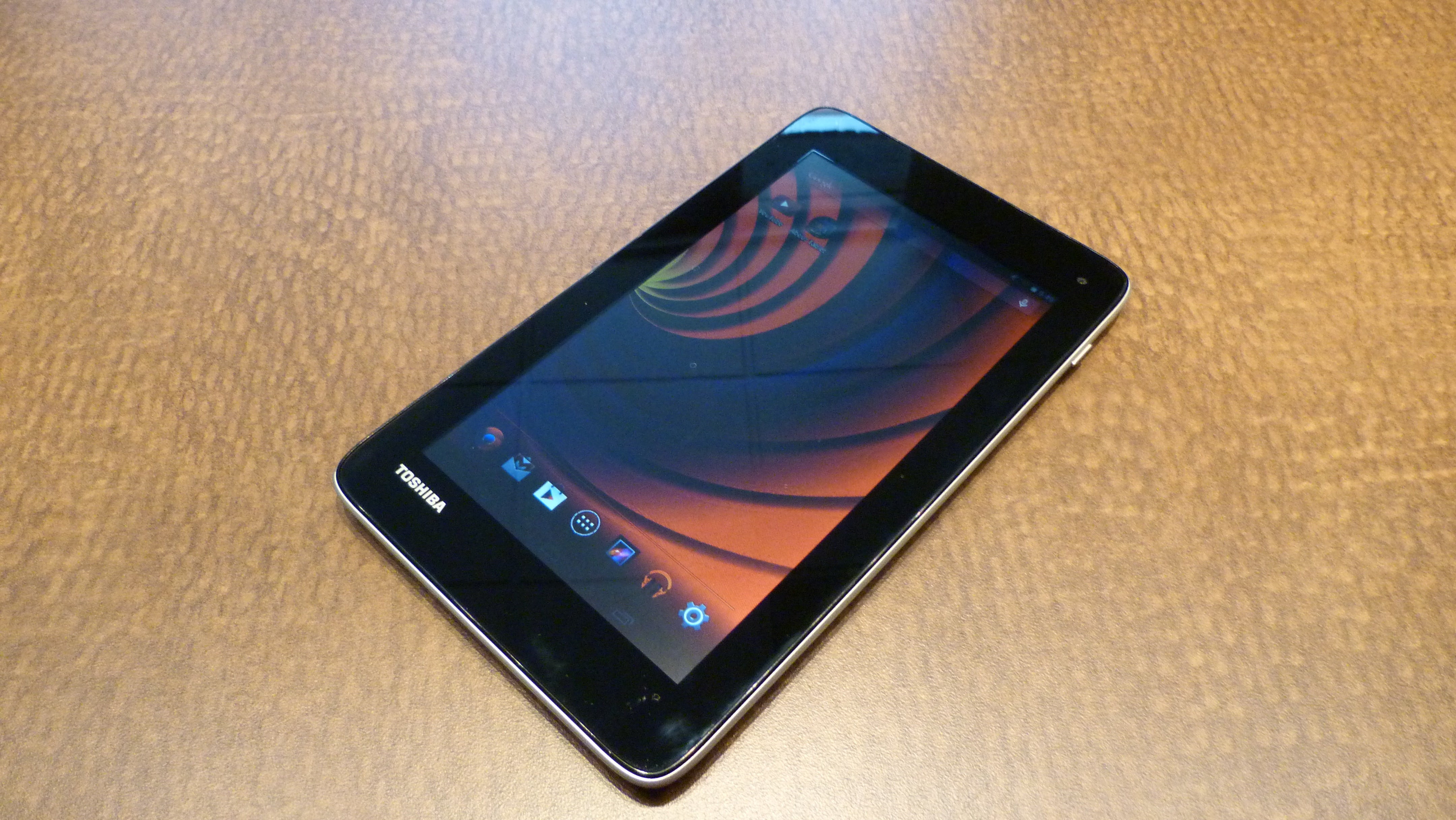
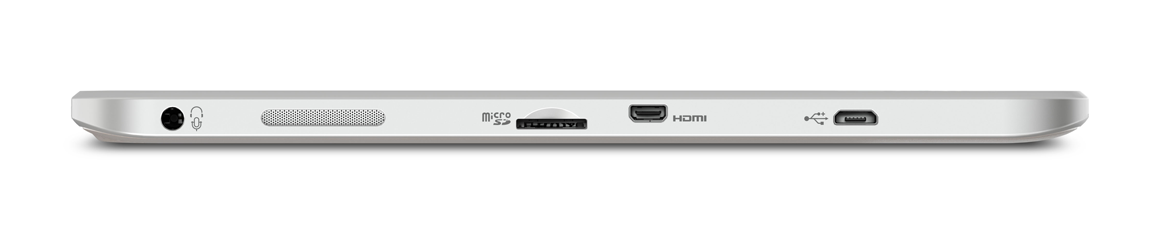
The Android-powered Excite Go, meanwhile, will have 1GB of memory and 8GB of storage, supplemented by a MicroSD card slot for storage and a Micro USB port for charging and file transfers. It will carry an MSRP of $109, but Toshiba expects retailers will discount it to a street price of less than $100. 
Toshiba Excite Go
Toshiba also announced the 7-inch Excite Go Android tablet, that's expected to sell for less than $100.

Aside from display sizes, the specs for both Encore 2 models are similar: They’ll be outfitted with IPS displays delivering native resolution of 1280x800 pixels, and both will support “connected standby” mode, meaning all your data—including email—will be fresh when you awaken the device from sleep mode.
They’ll have front and rear cameras (a 1.2-megapixel (MP), 720p webcam up front, and a 5MP, 1080p camera in back). Storage will be augmented by MicroSD card slots that support up to 128GB memory cards. And they’ll have 802.11n Wi-Fi adapters with Bluetooth 4.0. Both models will be outfitted with stereo speakers.
Although both models will come with one-year subscriptions to Microsoft’s Office 365 Personal, Toshiba is positioning the 8-inch Encore 2 as an entertainment/consumption device and the 10-inch Encore 2 Windows tablet as both an entertainment device and a productivity tool. As such, Toshiba will offer an optional keyboard cover for the larger model that will transform it into a small laptop.
The 10-inch model will also have a micro HDMI port (for TV multi-monitor support) that the 8-inch model lacks. Toshiba wants buyers to compare the 10-inch model to Microsoft’s Surface 2, pointing out that its tablet delivers the full version of Windows 8.1 for $269, where Microsoft charges $449 for a device that’s limited to running Windows RT.


Toshiba Encore 2
The 10-inch Encore 2 will have an micro HDMI port that isn't available on the 8-inch model. 

The 8-inch Encore 2 will be 0.38-inches thick and weigh 0.81 pounds. The larger Encore 2 will be even thinner—0.35 inches thick—but slightly heavier at 1.2 pounds.
Toshiba will offer additional models with more memory and storage. An 8-inch Encore 2 with 2GB of memory and 32GB of storage will sell for $249, while a SKU with 2GB of memory and 64GB of storage will go for $279. The 10-inch Encore 2 with 1GB of memory, 32GB of storage, and a keyboard cover will cost $299, while a SKU with 2GB of memory and 64GB (but no keyboard cover) will be priced at $329. Toshiba expects the tablets to be available for sale in early July.

Monday, May 26, 2014

Android to iPhone: Top Issues You’ll Face After Switching to iOS Environment

iPhone runs iOS which benefits from a more secure ecosystem compared to the open-source approach of Android OS. However, there are certain factors that may imprison you on the system it uses. Here are five things you should consider when switching to iPhone.


App Restrictions
You cannot install apps on your iPhone found in other sources. In other terms, you need to jailbreak or use crude methods to install apps not available from iTunes. Android and Windows Phone OS can both utilise the “sideload” methodology by allowing users to install apps from other sources in exchange of the risk being vulnerable to viruses at their own expense.
On the other hand, this tight security implementation makes iOSdevices very resistant to various digital infections including Heartbleed.
Fixed Accessories
Not all accessories from other brands are friendly to your iPhone. Apple has its own shop which sells compatible accessories for iPhoneand if you use a substandard accessory such as headphones, you may not enjoy listening to your favourite music because there is something odd with the audio output.
This is a particular disadvantage for those who want to recycle working accessories from Android or Windows Phone.
Less Freedom on Tones
Almost everything on iOS requires payment including making your paid song to become a ringtone. You need to purchase it again for $1 just to customise it in a ringtone format and if you are capable of hacking into the system, you need to incorporate the sound file to  iTunes like any other files used on iPhone.
Messaging Limitation
SMS and MMS services are basic on every smartphone no matter what OS is running. But in the case of iOS, you are limited to what you have and you cannot fully customise everything or modify to make the messaging app reflect your persona and style.
Moreover, iOS messaging application is not totally secure as it can easily be hijacked by spectators. It is not stable due to known major bugs which may interrupt daily messaging habits.
Minimum Toggles
iOS 7 may have improved the Control Centre but not as close with Android 4.4.2 KitKat. In Android, you can include several shortcuts on the notifications shade that are most important for your daily task. In iOS, most basic controls are available in the Control Centre but for certain shortcuts like Tethering, you need to go deep into the Settings menu in order to disable or enable it.
iPhone is a very powerful smartphone and mostly secure against threats. But you must be sure that you are willing to giving up some freedom to get the exclusive and more sophisticated approach of iOS.